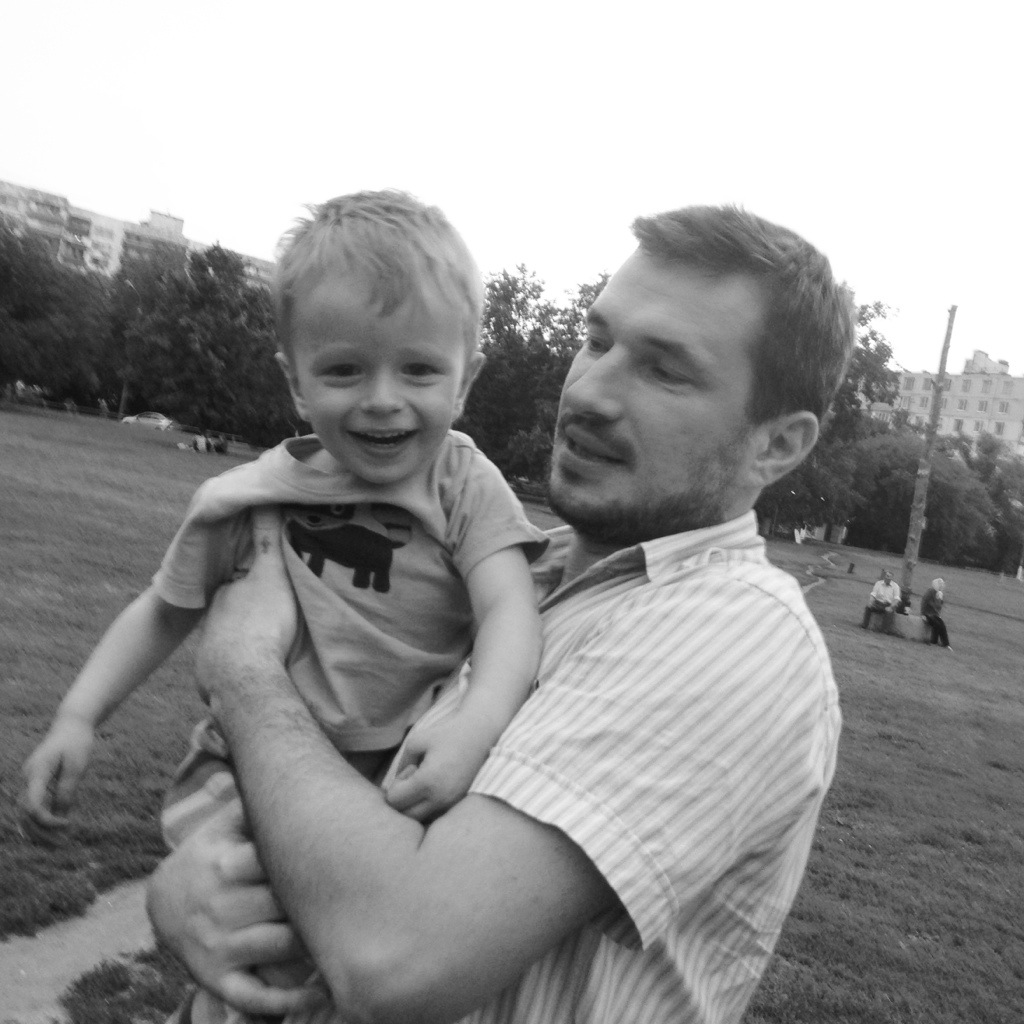
I really like the neighborhood of Kuzminki, I’ve decided. We’re in that calm before the storm there – before various overpriced developers move in.
The sky is high. The Czar is far.
I really like the neighborhood of Kuzminki, I’ve decided. We’re in that calm before the storm there – before various overpriced developers move in.
I wrote this article about what it’s like to play “The Last of Us” the other day. It got me reminiscing.
In the article, I make a passing reference to Russia in the 1990s, and how my friend said the same thing that I had been thinking for a while: some aspects of this most cerebral and literary post-Apocalyptic fungal zombie extravaganza are exactly like living through that period (the 1990s happened to me in Kiev, Ukraine – but it wasn’t all that different).
And by “aspects” I mean “emotional aspects.” It was like going through a horrible, irreversible betrayal by a loved one, and beginning to grow suspicious of the world and what it contained – the streets, the sky, the sounds.
You stared down an alley and wondered what was going to come out of that alley. You listened for shrieks in the night. You made sure the flashlight always had batteries.
For survivors of the post-Soviet Apocalypse, “The Last of Us” is a chance to safely go back – to die and re-spawn as needed.
Of course, I don’t want to be too dramatic about it. Fungal zombies weren’t exactly chasing us through the street. No one was making shivs in the dark, to stab monsters in the neck with (no one I knew personally, anyway – your mileage may vary).
But there was that sense of the landscape gone hostile. That notion of the darkened windows across the street watching you. Sizing you up. Etc.
When people ask me to explain what’s happening in Russia right now, I usually tell them that, “Most people don’t think a society is possible unless there is a strong leader to follow. And this has lead to the development of a quasi-society. An undead society, if you will. Neither here nor there.”
And people will say, “And by strong leader, you mean Putin.”
But I mean just about anyone, really. I mean people on both sides of the ideological divide. Some city mayor who may be corrupt (“they’re all corrupt,” Russians sigh with resignation. “So it’s impossible to care.”) – but will give land and funding for a children’s hospice, when the same impulse to help out should be coming from everyone. The Duma deputy who voted in favor of a horrific law (“Because that’s party discipline!”) but is actually a very intelligent and sensitive guy we all like to joke with on Twitter. The demagogue from daytime TV who has fought tooth and nail to get victims of dodgy investment projects back in his hometown to finally receive compensation. The actress with the eyes of a poet who agitates for the regime and saves the lives of severely ill children – every day. An anti-corruption blogger whose own corruption trial proved him right. A former it-girl who blogs about hating children and fat people – and who, like Cassandra, predicts every twist and turn of Russia’s modern political narrative.
All of such people are like islands, or the staring eyes of hurricanes. They’re both the illness and the cure. They’re the reason why Russia has only a quasi-society – and said quasi-society’s best hope, just because they can make things happen. Because they believe that they can make things happen – things both good and bad.
They’re heroes – and a heroic age is always a bitch to live in.
Still, Moscow in particular has already changed quite a bit. We have “wine and zombies” parties with my friends, because we know that it has changed. We feel it in the air. Great pillars of light burst from the skies in July and stand firm on the ground. Lovers sit in the shade of towering chestnut trees. A drunken hipster is much more likely to stumble out of that dark alley. A burly security guard will help you race across the supermarket to ring up your alcohol before the magic our of 11 p.m., wherein Bentleys turn into pumpkins and getting drunk is suddenly only legal in bars. A city-wide decree resulted in new playgrounds and exercise equipment for the elderly, who are confounded by the fact that they are expected to stay in shape. The Moscow metro has not degenerated into the London Underground. The nights are full of music – some of it actually good.
I wonder if the lavish spending on Sochi 2014 will ruin all of that – this impression of the possibility of society. I wonder if the 2018 World Cup will do it instead. I wonder if nothing much will happen, and we will simply grandly waste our youth on making up extravagant stories and telling them in print and digital.
Well, we will do that either way.
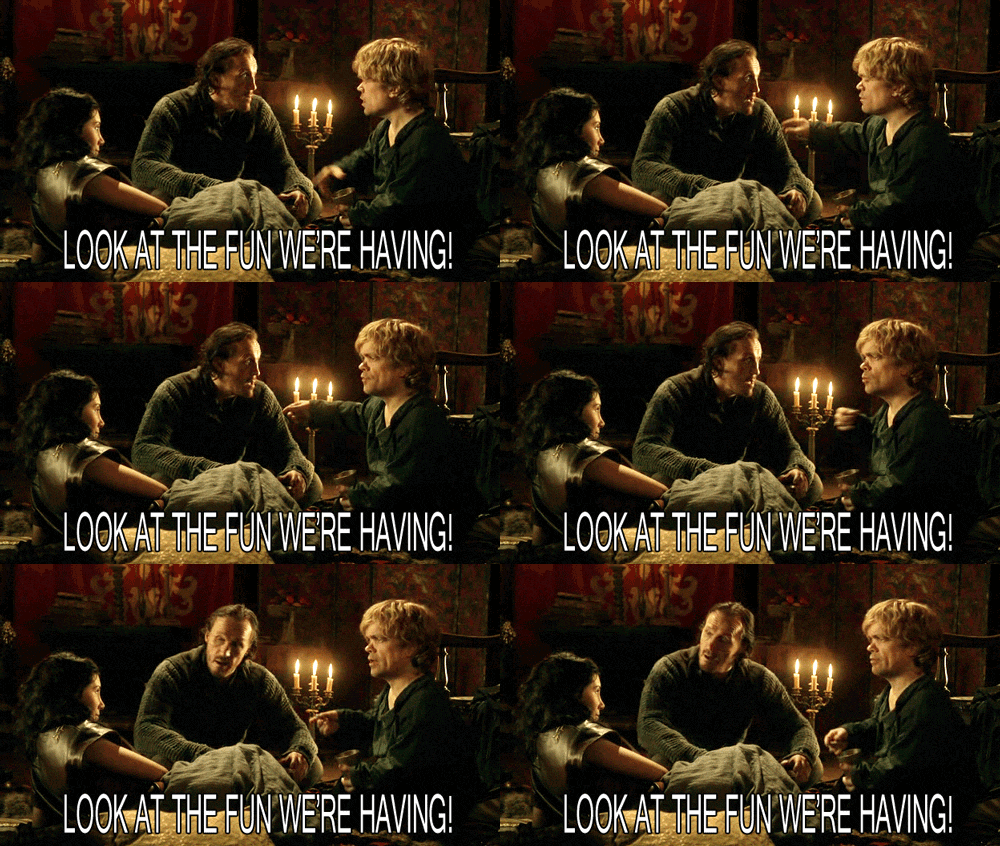
Also, something tells me I may have written my last play in a while. I don’t know if I want to write for theater crowds anymore. I want to write for mouthy boys and mouthy girls like me. I want to write for the people in their parents’ basements. The dispossessed, the perfectly cool. The gamers, in other words. And possibly the TV audiences.
There is no map I’m following as a writer. I’m following a bunch of vague notions. It’s frickin terrifying – but when it comes down to it, my theory is that people do most things for the thrill. We rarely smile when we play video games, for example. Doesn’t mean we do not love them.
“A baby wasn’t an idea, as love was an idea. A baby was a fact. It was a being with a mind and a nature, and you could feel about it any way you liked, but a baby wouldn’t care. Just by existing, it demanded that you believe in a future: the future it would crawl in, walk in, live in. A baby was a piece of time; it was a promise you made that the world made back to you. A baby was the oldest deal there was, to go on living.”
– Justin Cronin, The Passage.
This is how I felt after I read the above for the first time:
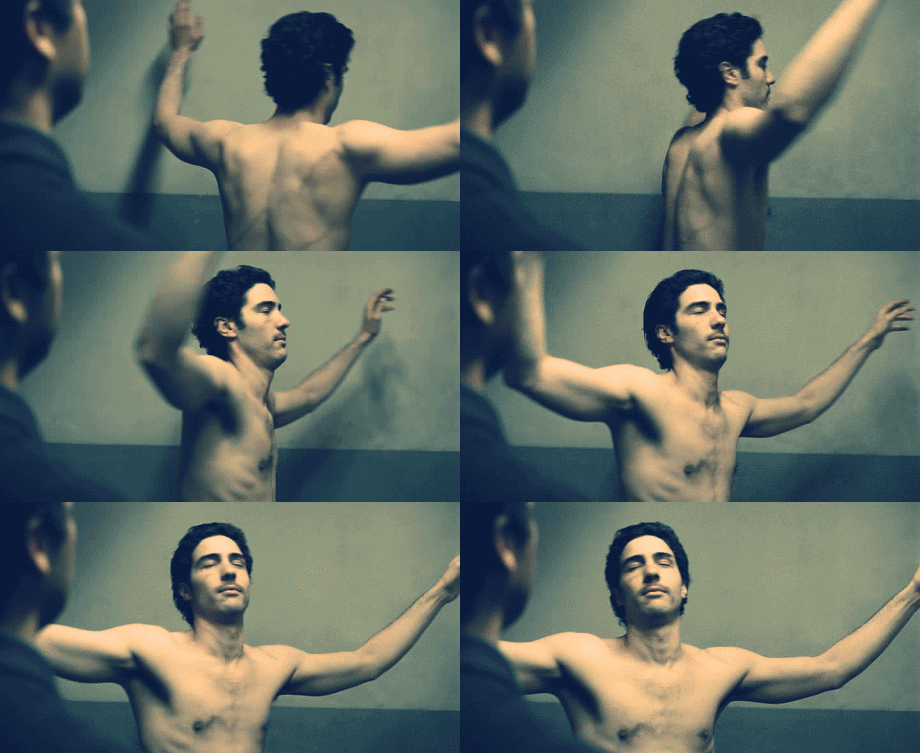
Just like a prisoner who just got laid. Oui.
I found this month-old gif (originally a cine via Cinemagram) of mine on my phone today:
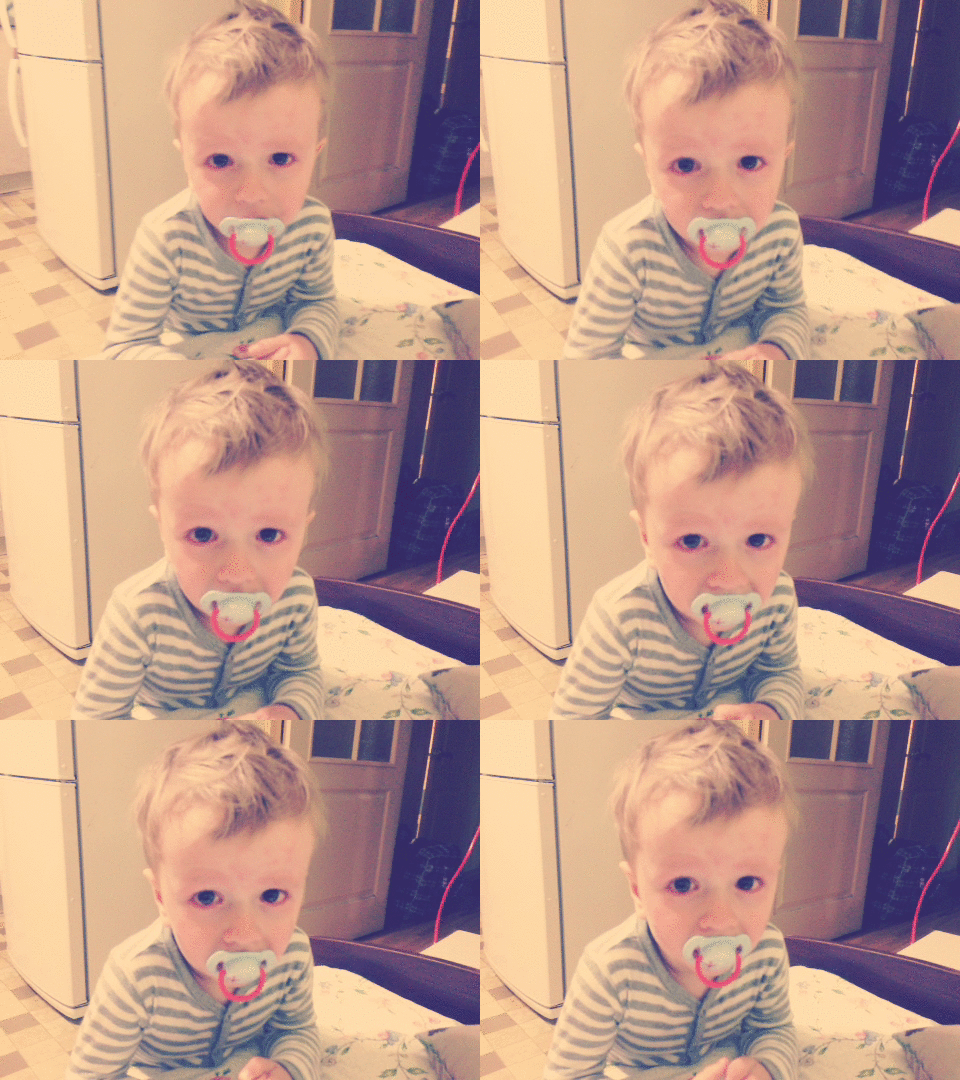
That was the day before we moved, leaving Novogireyevo for the older and stranger neighborhood of Kuzminki, also in eastern Moscow.
Grandma had introduced Lev to the binkie when he was a few weeks old (without asking my permission, of course. Why should grandma *ever* do something like that?), and moving day was as good as any day to bid it goodbye. We figured that the thrill of a new apartment, new playgrounds, and so on, would distract Lev enough from his old habits – and we were ultimately not mistaken.
In the gif, he has just reclaimed the binkie after I had unsuccessfuly tried to hide it in the kitchen.
A reminder to me that even necessary change is often painful.
I told the hostess I needed a nice table to work at, and I almost meant it. Almost.
But what I really needed was to just watch the Skytrain pass overhead, suck on a cocktail straw, and read Caitlin Moran. I needed to remember myself, and so I got to remembering.
What it feels like to be in a strange city at night, with no one to answer to but you – I remembered that part.
There were louche Americans at the bar, trapped without the girlfriends who had lingered westward, and I could only smile and nod at them.
Sometimes, there is too much guava and the bed is far too big – and all of these are good things.
I am all for traveling alone (I am actually traveling with my guy colleagues – but we give each other space), especially when you’re a young mother. It doesn’t always end well, and hidden dangers lurk, not the least of which is being on speakerphone with Such a Cutie and his dad, finding yourself cooing while examining imported steaks in the store down the street, finding yourself aching.
But women need the dark road too. Especially if “dark” is only a euphemism for something all together more complicated.
My own dark road is frequently genteel (unlike my actual life). I always find myself an Intercon with a lounge like a glass box, and the odd writing assignment. Guy colleagues treat me during the day, so I can afford to reserve the night for me.
In Bangkok, you feel the distant presence of the jungle. It’s in the shadows the trees cast in the artificial light. Those shadows are ravenous.
 Natalia A.