I’ve lived like they live in “On the road.”
It’s fun, but the pain begins to add up after a while.
You can’t take solace in people envying your freedom forever.
Your teeth fall out because you clench them too many times. When you wreck your boots and go in to have them fixed, the cobbler gives you looks. At night you press your forehead against the glass and try to discern shapes in the dark – and when you do discern them, you wish you had something here on the inside with you to distract you instead.
Madness is like light from a forest fire – it’s a different story when you’re watching it advance, hear the crackle and the frightened birds. People who think of going to the movies on a Friday night as entertainment will tend to forget that. Other people’s stories are looped and fenced – with a beginning, middle, and end – and the fences leave you out. Spies deal with paperwork, the mad get puffy-faced from pills, guest-workers sweep up broken glass in the wake of the young and attractive rebels. You can afford not to know these things when you’re young, or rich – or both.
People get hurt. On the outskirts of cities, where there are stars to see in the reaches, you think you can afford to be philosophical about that sort of thing – but the reality of it always catches up with you. It’s as unsentimental as winter skin, lack of sleep, and the sign for the morgue across the road.
You keep saying that the game has gone too far, but your words are thrown back at you with full force – twisted, comical, pathetic. “This is how you cry – ah ah ah, poor me, poor little me, these are the words coming out of your lying face, liar, because it’s your nature to lie and twist around, like a squealing pig, like your mother and her mother before you.” And you know that it’s true – you do have a lying face, it has lied to you from every mirrored surface for all of these years, and now the skull underneath shows through, smiling and watchful.
You’ve stood on the trains, with your head sticking out of the window, the midnight branches reaching so close as you laughed and dodged them, and you thought that you could do it forever. Now when the scream of terror and confusion comes at night, you shush it with words about bad dreams – but you’re not nearly as good at it as you were when you were lying to yourself. “I’m so sorry – I didn’t know. If only I had known.” Yes, that’ll make it all better. If you say it long enough, the magic door in the mountain will surely crack open.
But you’re in the footnotes of history already, you’re told, and that’s supposed to make it all worthwhile.
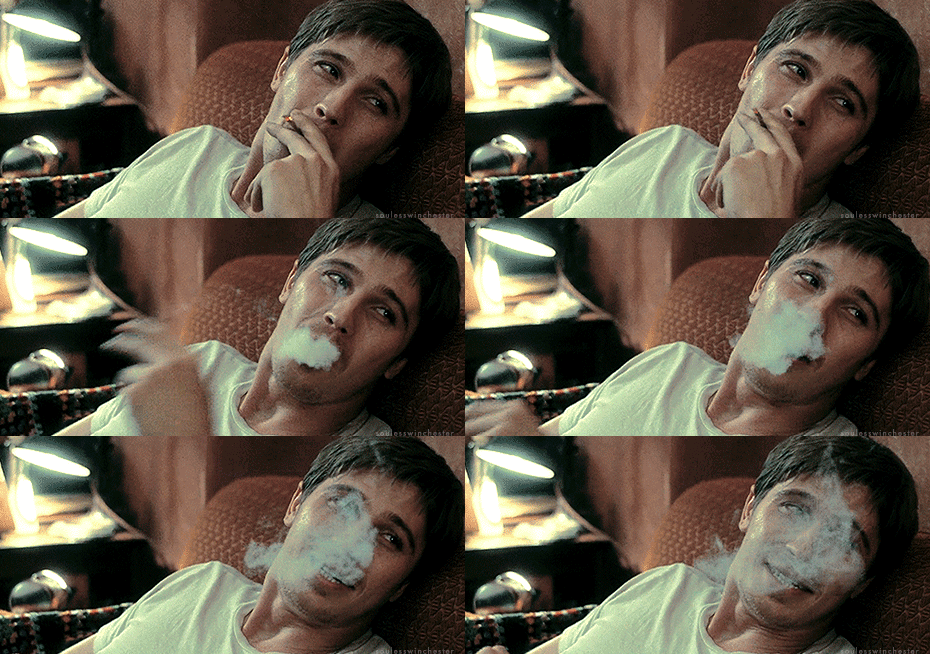
I’ve lived like they live in “On the road.”
And “Eastern Promises.”
And “Revolutionary Road.”
It’s not a life.


 Natalia A.