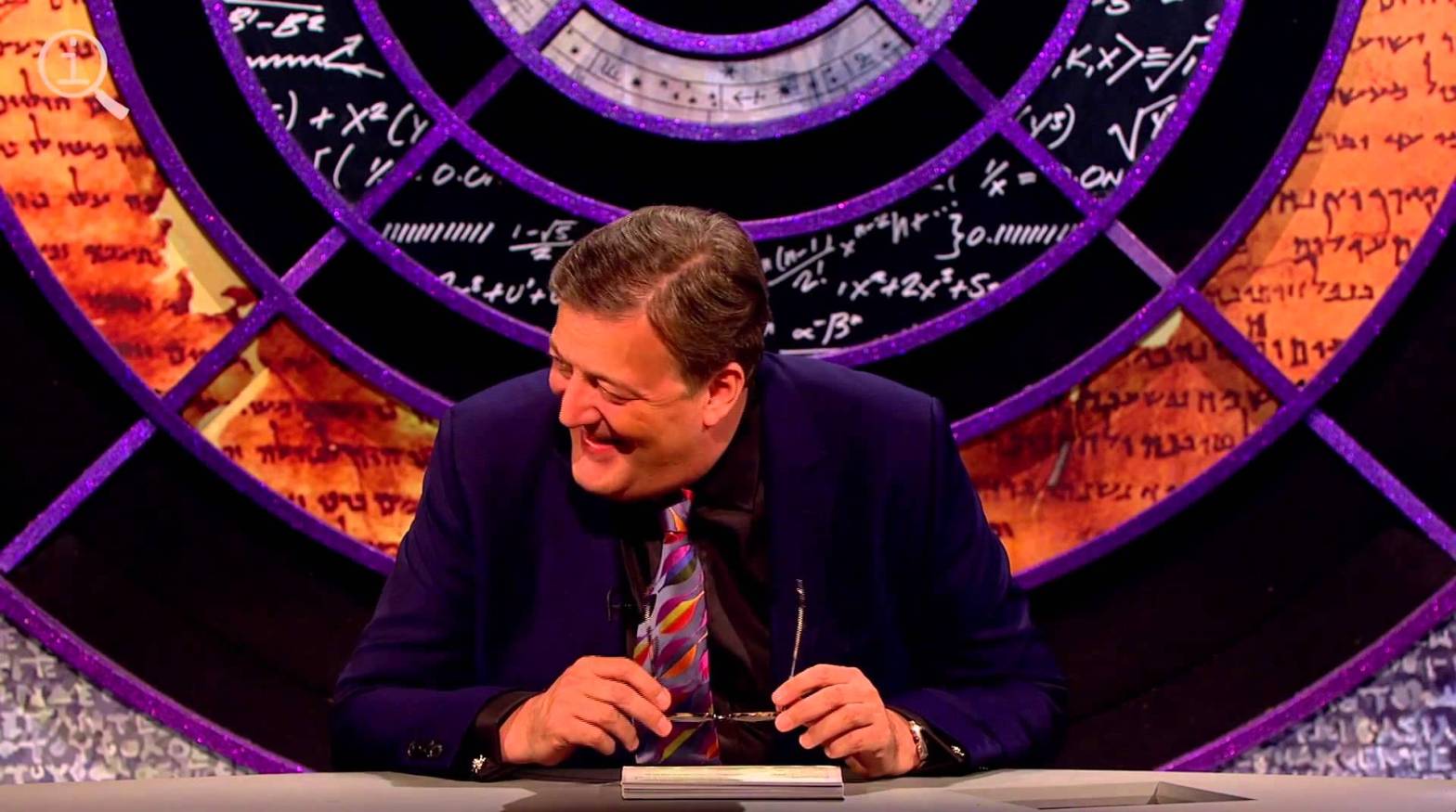
Stephen Fry is right about trigger warnings – he’s especially right about self-pity

People are calling Stephen Fry’s comments about sex abuse victims “an extraordinary attack,” because he had the temerity to suggest that trigger warnings on literature are bullshit and that self-pity is an ugly, self-defeating emotion.

He stated this bluntly and without the usual hand-wringing and tiptoeing that accompanies discussion of sex abuse in liberal circles. OH NO. WHAT AN EVIL JERK.

Here’s the thing though – he’s right. Trigger warnings amount to nothing but clumsy, amateur “therapy” that can have an adverse effect.

The truth is – and there is a wealth of literature and studies on the subject, really – triggers are random. You’re not going to precisely KNOW what it is that triggers you on a given day, that’s kind of the whole problem of being psychologically vulnerable.

Being triggered can actually be useful, because it helps you understand and potentially expand your boundaries. It can allow for a dynamic process of healing.

And environments that are meant to be safe spaces for victims of abuse work when there are professionals around, when the safe space is part of therapy.

Amateur “safe spaces”, on the other hand, are frequently more stressful than your regular, bunch-of-normal-people-who’ll-occasionally-say-bullshit-to-you spaces. Why? First of all, because everybody’s worried about saying the wrong thing. Interaction is so thoroughly policed that it becomes a maze of potential wrong turns.

I experienced abuse as a child. It destroyed and remade me, and – yeah, it was a terrible thing. You can trust me on this.

But let’s say I had my choice of whom to hang out with: Option 1 is a group of college students who think that it is important to never! say! the wrong! thing! to people like me – and who would accuse me of being a self-hating sell-out should I disagree. Option 2 is some loudmouth who can push my buttons and even – dear God! – call me on my bullshit, i.e. treat me like a fellow human as opposed to a glass vase that will shatter if mishandled.

I’m going to go with Option 2. Option 1 is re-traumatizing.

This goes to Fry’s point about self-pity. Amateur “safe spaces” absolutely foster self-pity. Because the only real power they afford to members is the power to call someone out when they’ve been triggered. Agency depends on their status as victims. Agency = “You triggered me! You said something offensive! How dare you! Asshole!” You can’t exercise that kind of power if you’re generally committed to practicing self-care and living a better sort of life. And your energy doesn’t go towards untangling your own issues, it goes toward reminding everyone that DAMMIT, YOU HAVEN’T MOVED ON.

The notion that these amateur “safe spaces” are liberating is a lie. They just introduce a different hierarchy. The bigger “victim” you are, the more “rights” you get to have in policing others. Interaction as equals is impossible, because someone is always a bit more ravaged/in pain, and that person gets to shut down others. It is a poisonous dynamic. It harms people, because, again, status is derived from pain. Dealing with pain means losing status. Continue reading “Stephen Fry is right about trigger warnings – he’s especially right about self-pity”
His Sin, Her Soul: On Vladimir Nabokov’s Lolita (republished from The Second Pass)

Original publication date: MONDAY NOVEMBER 30TH, 2009. Republished with kind permission from John Williams.

His Sin, Her Soul
By Natalia Antonova

Reviewed:
Lolita by Vladimir Nabokov

The luster of scandal wore off Vladimir Nabokov’s Lolita a while ago. Anyone reading the testimony of Roman Polanski’s teenage victim on The Smoking Gun must have little capacity to be shocked by Humbert Humbert’s fictional crimes. I’m willing to bet that for the modern reader, the only shocking thing about Lolita is how the writing transforms the subject matter into a thing of startling beauty, and how effortlessly Nabokov avoids prurience in order to create something more chilling.

But while the scandal of it may have faded, the book’s vocabulary continues to live a life of its own. When a young girl is called a Lolita, we imagine a knowingly hyper-sexualized child, one who wears too much of her older sister’s make-up and lets her underwear peek out as she wanders into the peripheral vision of some man. If “Lolita” isn’t always code for “she was asking for it,” it’s at least a suggestion of some impropriety or mitigating factor, an indication that an older man’s younger victim wasn’t exactly a gentle-faced virgin — or she certainly didn’t look like it, Your Honor.

In light of this cultural appropriation, I wasn’t surprised when a fairly good friend asked me why on earth I — a stridently vocal survivor of sexual abuse, someone who screams her head off every time someone shrugs that “boys will be boys” — would profess so much admiration for Nabokov’s most famous book. Don’t I realize that Lolita the book and Lolita the term feed off one another in the public sphere? And that even if it were possible to separate it from the hiss of cultural static that has amplified around it over the years, Lolita is still a book that takes an extremely ugly story and makes it extremely gorgeous? Implicit in these inquiries was the real question, of course, which emerged after my replies failed to satisfy: “How can you stand reading it, with everything you say you have been through?”Continue reading “His Sin, Her Soul: On Vladimir Nabokov’s Lolita (republished from The Second Pass)”

Zombie Survivor: A rant on The Walking Dead’s terrible season 6 finale

SPOILERS through season 6 of The Walking Dead. 

The purpose of this blog is not to shout in exasperation when a television show goes thoroughly off the rails, but I’m so frustrated with “The Walking Dead” right now that it’s either this, or beat a motherfucker with another motherfucker.

As I’ve said before, the show owes its enduring appeal in part to the fact that people love to complain about it. When it comes to horror that aims for mass appeal, you need to be able to distance yourself from it. There are exceptions, but a long-running television series based on a long-running comic book series would be exhausting if it weren’t occasionally also just annoying.

Still, there is, “Haha, let’s make a meme out of this dumb exchange between two characters,” and then there is, “This show is reaching greatness – and them abruptly plunging into absurdity.”

I already wrote down some thoughts on how the show’s sixth season rose to new heights before devolving into ridiculousness after the 15th episode aired. That episode was a neat summation of most bad things about TWD: dialogue that acts as filler, characters going batshit insane for the sake of advancing the plot, “emotional” moments that seem like cringe-worthy tryouts for “My So-Called Life,” etc.

I wasn’t ready to freak out until the season six finale aired. And then it aired. Continue reading “Zombie Survivor: A rant on The Walking Dead’s terrible season 6 finale”

Thing, a short biography

Once upon a time, there was a girl who had an official name – the name on her birth certificate, a name for bureaucrats and people who didn’t know her well – and a true name. The true name was Thing.

Thing was taught charts and graphs early on. She knew one’s beautiful years must be maximized for profit.

Thing was not symmetrically beautiful, but this too was an asset to be maximized – rich men with brains got bored of traditional beauty, the same set of breasts, the same set of lips, they weren’t collectibles. If you broke one, you could always get another.

Thing’s looks and intelligence made her a collectible. Rich men with brains came up to her at parties and lit her cigarettes for her and informed her of the fact. “If I broke you, I couldn’t get another of you,” they said.

Intelligence was problematic, though. It wouldn’t be bought. Instead it cried out inside her like a child lost in a fairy tale forest, worried about the possibility that there were creatures with teeth in it.

Intelligence wouldn’t let Thing sleep at night. And the men next to her couldn’t sleep either. And men like that valued sleep.

To be perfectly honest, intelligence always had it in for Thing.

It caused her much suffering when she was young, because she couldn’t figure out who she was. This upset the boys.

Things were supposed to be things, boys knew that, their mothers and fathers and gods and televisions had taught them, and a thing that didn’t act accordingly was engaged in false advertising.

She deserved to be punished, and punished she was, painfully and repeatedly, in a way that left marks.

The marks of pain spread inside Thing and grew darker. The darkness covered more and more territory and became a breakaway republic. There was war there, and death, and yowling cats, and cockroaches whispering across cracked plaster inside lightless buildings.

Thing liked it, though she would not say so, aware of the fact that nobody would light her cigarettes at parties if she let on about what was going on inside her, and lighter fluid was expensive, truth be told.

In high school, Thing had been an ugly duckling – you’d think that this would’ve forced her to open up to the possibility that if no man wanted her to be his thing, she could try being human. But nobody taught a class on being human. There weren’t any pamphlets she could read.

So Thing went through life and paused in the archways of the night and listened for the wolves who could always smell the darkness on her.Continue reading “Thing, a short biography”

Why don’t you treat men this way? The false dichotomy of “mother vs. artist”

This post of on combining art and motherhood made the rounds this past winter. There were a lot of responses, public and private. Two of the more recent responses made me feel like revisiting the issue:

1. The Divided Heart is a more honest exploration of what it’s like to be a mother and an artist. I’m sorry, but I think you are over-compensating and it shows. For decades, women have been quite open about how combining great art and motherhood is almost always an impossibility. One blog post on the matter from someone who sold one play is not going to convince society.

2. All due respect, Natalie [sic], but people like you lure promising artists towards breeding, and the results are almost always disastrous. I wonder if you’ll change your mind when your kid is on the therapist’s couch, discussing the ways in which mum neglected him so she could make her Art, and he almost certainly will be.

So to address all that:

Who the hell are you to argue that women can be both mothers and great artists? You’re nobody! But it’s not about me.

The idea that you can’t reconcile being a mother with being great artist is, today, a peculiarly Western concept. In many other parts of the world, women just get on with it.

One of Russia’s greatest poets, Anna Akhmatova, was a mother. Nobody goes around wringing their hands on her behalf. One of Russia’s greatest painters, Zinaida Serebriakova, was a mother – and, once again, people really didn’t make a big deal out of it.Continue reading “Why don’t you treat men this way? The false dichotomy of “mother vs. artist””